Home / Straight Answers / How brokers get paid
Straight Answers · How this works
Do I pay you? How does a mortgage broker get paid, and what's the catch?
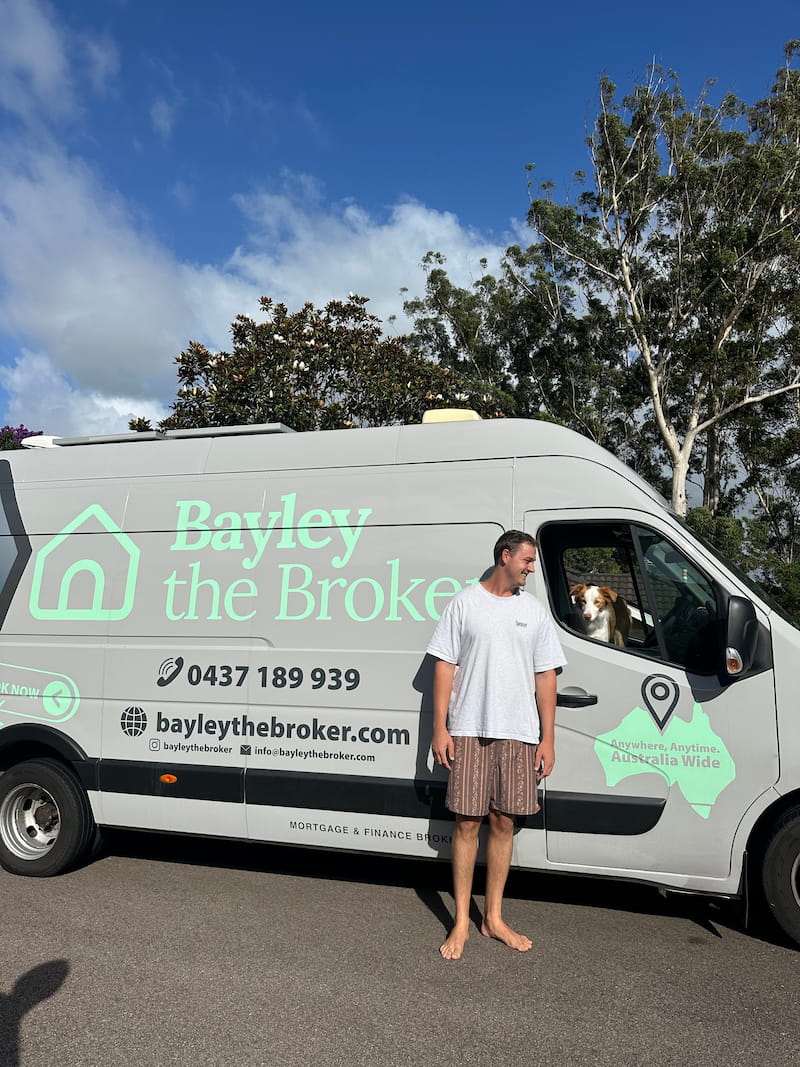 Bayley Clarke · Mortgage broker on the road · Last checked 1 September 2026 · 3 min read
The short answer
My clients don't pay me. I charge the bank for the work that I do, and they pay me an upfront commission on the settled loan amount, then a small trail commission ongoing so I can keep looking after you.
There's no catch. The bank has gained a customer they didn't have to pay to attract, so they pay me instead of you. What the bank does build in is a clawback: close the loan inside 12 months and they take every dollar back. Which means I only get paid if the loan I set you up with actually lasts.
The two minute version. The rest of this page is the detail underneath it.
Why the bank pays and you don't
When a home loan settles through me, the lender pays an upfront commission that works out to roughly 0.65% of the settled loan amount, net of any money sitting in the offset. That is the whole fee for the work of finding, comparing, packaging and pushing the loan through. None of it comes from you.
The reason I get to charge the bank and not you is simple. The bank has gained a new customer they haven't had to pay themselves to attract. No branch, no ad campaign, no call centre. So they pay me for bringing you in, and it's a free service to you.
The caveats the bank builds in
My payment comes with strings from the bank's side, and you should know what they are because they shape how I work.
If for any reason the loan is closed within 12 months, whether that's selling, moving to another lender, whatever it may be, the lender takes back all of the commission they paid me upfront. I would have worked for free. Between 12 and 18 months, they normally take back half. After 18 or 24 months, depending on the lender, I'm in the clear.
Read that as a guarantee in your favour. A broker who sets you up with a loan you'll want to leave in a year gets nothing. So the loan has to be right for you the first time, not just approvable.
The trail, and what it buys you
In addition to the upfront commission, the lender also pays what's called a trail commission. It's usually around 0.15% of your loan balance, paid ongoing while you're with that bank.
The reason they pay it is so I can continue looking after you as a client of their bank. That's doing pricing reviews. That's holding your bank accountable when new customers are getting a better deal than you. That's making sure the loan set-up is still in your best interest as your life changes.
And if for any reason it no longer fits your needs, cool, I'll switch you again. The trail follows you to the next lender, so I have no reason to keep you somewhere that's stopped working.
The honest bit: it's a cool relationship, and it has one edge
It's a cool relationship I get to have with my clients, because it means I can provide support, guidance, education, all the rest of it, all for free. And I get to charge the bank, not you.
The edge is worth naming. Because the bank pays, you could reasonably ask whether I'd steer you to whoever pays most. The short version is the banks all pay me roughly the same, and there's a best interests duty sitting over the top of every recommendation I make. The longer version has its own page below.
Want to see what the work actually looks like?
A 30 minute call. We go through your situation, I tell you what's realistic and which way I'd lean, and you leave with numbers. You don't get a bill at the end, because the bank pays me, not you.
No cost to you, ever. The bank pays me when a loan settles. · How I get paid
Related answers
Broker or going direct to the bank: which gets me the best deal? Won't a broker just push me to whatever bank pays the most? You're recommending a bank I've never heard of. Is it safe? Can I ask for a better rate straight after settlement?Not your question? Book a call and ask it, or call 0437 189 939.