Home / Straight Answers / Same day buy and sell
Straight Answers · Buying and selling
Do we need a bridging loan if buying and selling on the same day?
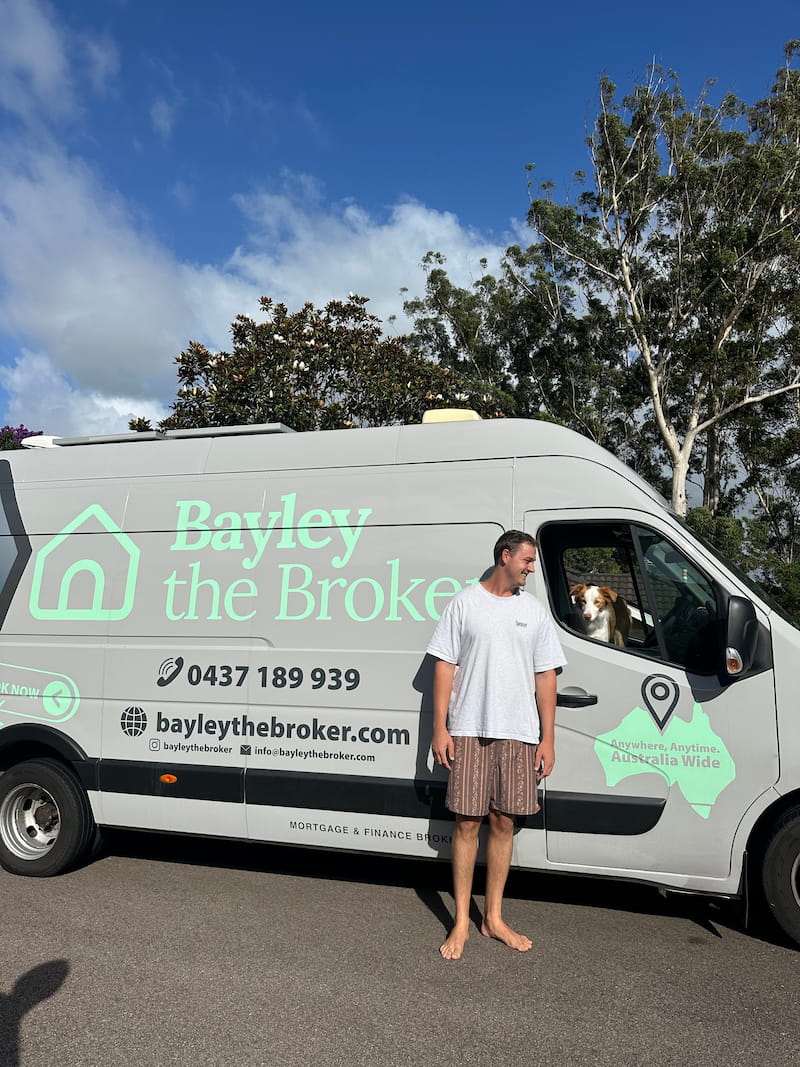 Bayley Clarke · Mortgage broker on the road · Reviewed 24 August 2026 · 4 min read
The short answer
No, you don’t. What happens is the banks talk to each other. The conveyancers talk to each other and they battle it out to make sure everything aligns perfectly.
So on that particular day, your property is sold, it gets transferred to the new owner, and then the property you’re buying is transferred into your name and it all happens in the background. Now, the timing of this is incredibly hard to get. I’ve had it happen maybe two or three times total. That’s why a lot of people choose bridging finance anyway, simply for the convenience: you can buy before you’ve sold.
The 50 second version. Everything below is the detail underneath it.
What a same day settlement actually is
It has a name: a simultaneous settlement. Two separate contracts, your sale and your purchase, with settlement dates that match. On the day, the money from your buyer pays out your existing loan, whatever is left over becomes your deposit and costs on the new place, and the new lender funds the rest. Your conveyancer and the two lenders run both settlements back to back on the settlement platform, usually within the same hour.
You don’t need a loan to carry two properties, because you never own two properties. One goes out and one comes in on the same afternoon. If it lands, it’s the cheapest way to move house there is. No second loan, no extra interest, no premium for carrying debt you don’t need.
Why the timing is so hard to land
Because you don’t control most of it. A simultaneous settlement needs four things to line up on one date: your buyer’s finance, your buyer’s conveyancer, your vendor’s discharge of their own loan, and your new loan. Any one of them running a day late breaks the chain. Your buyer’s bank is slow with the funds, the vendor’s lender hasn’t processed the discharge, a document gets rejected on the platform, and the whole thing rolls to the next available day for everyone.
That’s the honest reason I’ve seen it work maybe two or three times. Not because it’s a bad idea, but because it depends on strangers being on time. And when it slips, most contracts let the other side charge you penalty interest for every day you’re late, so a delay you didn’t cause can still cost you money.
| Path | What you’re carrying | What you’re paying for | What can go wrong |
|---|---|---|---|
| Same day settlement | One loan at a time | Nothing extra | Anyone in the chain running late |
| Bridging finance | Both properties, both debts, for a period | Interest on the bigger debt while you sell, sometimes a higher rate or fees | The sale taking longer or fetching less than planned |
| Sell first, then buy | One loan, with a gap in between | Rent or a stay with family, two moves | Missing the place you wanted while you wait |
Bridging: paying for the convenience
Bridging finance is a lender agreeing to carry both properties for a while. You buy the new place before the old one has sold, the lender holds a loan over both, and when the sale goes through the proceeds pay down the combined debt to whatever is left on the new home. The combined figure while you own both is called the peak debt. What remains after the sale is the end debt. Most lenders give you somewhere between six and twelve months to sell.
You do pay a little bit of a premium for it. Interest runs on the peak debt for as long as the bridge is open, and that peak is your old loan plus the entire new purchase plus costs, so it’s a much bigger number than either loan on its own. Some lenders charge a higher rate on the bridging portion, some charge a fee, and some do neither and just let the interest do the work. What you’re buying with that premium is certainty. You settle on the new place on the date you chose, move once, and sell without a deadline hanging over the campaign.
| Selling for $700,000 with $300,000 owing, buying for $900,000 | Same day settlement | Bridging |
|---|---|---|
| Debt on settlement day | $550,000 on the new home | $1,250,000 across both, including about $50,000 of purchase costs |
| Debt after the sale | $550,000 | $550,000, plus any interest the lender added during the bridge |
| Interest is charged on | $550,000 from day one | $1,250,000 until the sale, then $550,000 |
Illustrative numbers, not a quote, and the costs figure is a placeholder for stamp duty and fees that depend on your state and price. The point is the middle row: both paths end in the same place. The difference is how much interest you pay to get there, and whether you’re prepared to bet on four strangers being on time to avoid it.
The hurdle with bridging is usually the peak debt. The lender needs to be comfortable carrying the whole $1,250,000 against both properties, and it needs the end debt to service on ordinary terms once the sale is done. Some lenders assess your income against the peak, others against the end debt with the bridging interest added on top. Whether you make repayments during that window, and on which figure, is its own question, and it’s the next one on the list.
Four things that catch people out
- The dates have to be written in, not hoped for. A same day settlement only exists if both contracts carry the same settlement date before you sign the second one. If you’ve already exchanged on the sale, the purchase has to be negotiated around that date, and vendors don’t always agree.
- Your buyer’s finance is the risk you can’t see. You’ll know your own loan is ready. You won’t know whether your buyer’s bank has issued its documents until the day is close. Ask your agent to find out how the buyer is funding it, early.
- If the sale falls over, you’re a bridging client whether you planned it or not. Settlement on the purchase still happens on the contract date. If the sale side collapses a fortnight out, you need a lender willing to carry both properties, fast. Having that conversation before you exchange is a lot easier than having it in the last two weeks.
- Subject to sale clauses get rejected. Making your purchase conditional on selling your current home protects you, but in a market with other buyers around it’s the easiest offer for a vendor to pass over. Bridging is often how people make an unconditional offer without selling first.
What to bring, and what to ask
If you’ve already got a contract on either side, bring it: the settlement date and the price are the two numbers everything hangs off. Otherwise, your current loan statement, a realistic idea of what the sale will fetch, and the price range you’re buying in are enough to map all three paths in one sitting.
Then the question isn’t “do we need bridging.” It’s “what does the same day version save us, what does bridging cost us, and how much do we want to pay to not depend on other people’s timing.” Once those three are on the table, most people know their answer in about five minutes.
This page describes how bridging and simultaneous settlements generally work as at August 2026. Individual lenders aren’t named on purpose: bridging terms move, and the right structure depends entirely on your situation rather than on a list in an article. The other bridging answers on the list: peak debt versus end debt and whether you have to sell before you buy.
Buying and selling at the same time?
Send me your loan statement and the two prices you’re working with and I’ll map the same day version against a bridging version, with the peak debt, the end debt and roughly what the bridge would cost per month of carry. Takes maybe ten minutes and it costs you nothing.
No application, no credit check, nothing on your file. Just the numbers. · How I get paid
Next question
Do I make repayments during bridging finance?If you end up bridging, this is the first thing that changes your cash flow. Some lenders want interest paid monthly, some add it to the loan.
Related answers
The full guide: Buying your next home Can we afford to buy before we sell? (peak debt vs end debt) Do I have to sell my current home before I buy the next one? Why doesn't my equity count as borrowing power?Not your question? Book a call and ask it, or call 0437 189 939.