Home / Straight Answers / Tiny homes
Straight Answers · Tiny homes
Why won’t banks finance tiny homes?
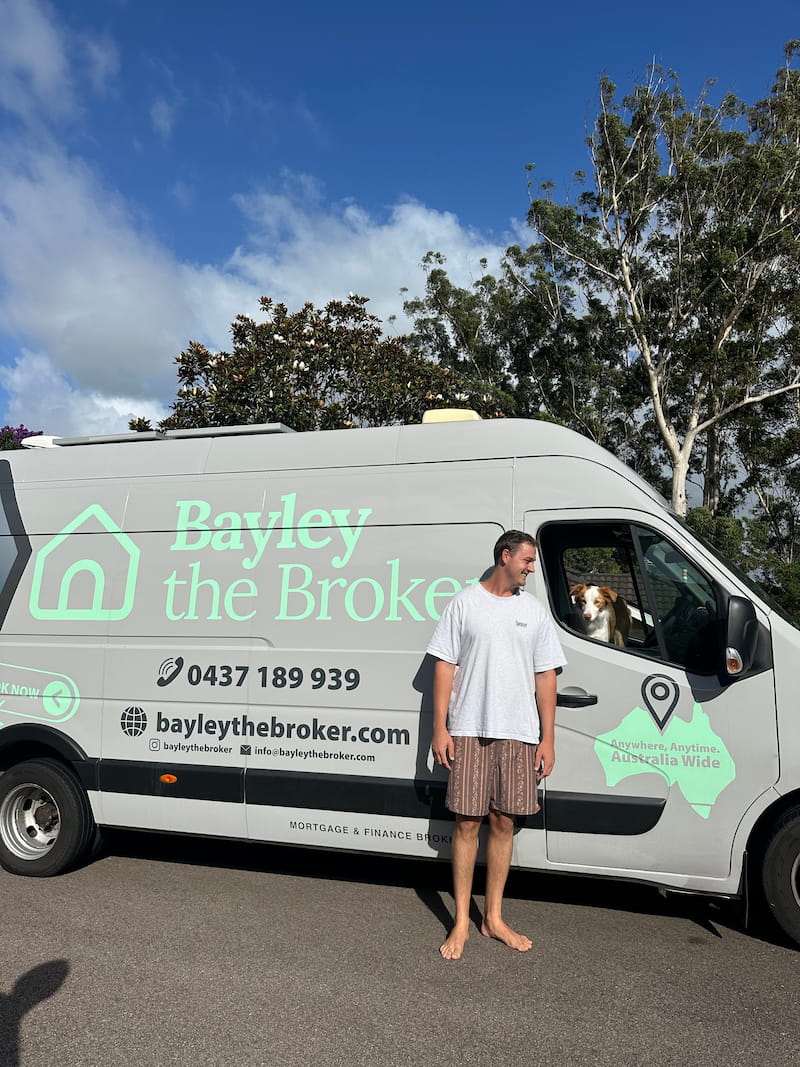 Bayley Clarke · Mortgage broker on the road · Lender policy checked 24 August 2026 · 6 min read
The short answer
Tiny homes are not seen as a permanent dwelling because it sits on a trailer. It often has a VIN or a rego number and is therefore more like a vehicle than it is a house.
This changes when the tiny home is permanently fixed to land that you own. You’ve plumbed it with sewer, you’ve got water, you’ve got electricity, and it’s fully installed via stumps or whatever method to the land so it can’t be moved. At that point the lenders will see it as a home that you’re living in and may look to lend against the value of that. Up until that point, it’s seen as a vehicle. So a lot of people will need to go down the secured or unsecured personal loan route to finance a tiny home, because it is still a very vague industry for the banks and they don’t really touch it.
The 60 second version. Everything below is the detail underneath it.
The one hinge every lender swings on
Every conversation about tiny homes, kit homes, modular homes and everything in between ends up at the same question, and most people don’t find out which side of it they’re on until weeks in: is the dwelling permanently fixed to land you’re mortgaging, with the services connected? Almost every lender’s answer flows from that one line.
It has nothing to do with how nice it is. I’ve seen tiny homes with better joinery than most kitchens I walk into, and the lender still says no, because a bank securing a loan against something that can be towed away has no security at all. On the panel I work with, that isn’t a matter of finding the right lender. A dwelling that isn’t fixed to land is unacceptable security everywhere, and where there’s land underneath it, only the land gets valued.
Three categories, and your bank means a different one
Kit home. Modular. Prefab. Transportable. Relocatable. Mobile. Tiny home. People use those interchangeably. Lenders don’t, and most run three separate policies depending on which bucket your build lands in.
| What the lender calls it | What it means | How the panel treats it |
|---|---|---|
| Prefab, modular or kit | Built off site in a factory, delivered, assembled and permanently fixed to your land by a builder | A minority will fund the build as a construction loan. Most exclude the contract type altogether |
| Transportable or relocated | A complete or near complete dwelling trucked to site and fixed down, including an existing house moved from another block | More lenders accept it once installed with services connected than will fund the move itself. Until then, most treat the property as vacant land |
| Mobile, portable or on a trailer | Not permanently fixed. Wheels, skids, a park site, a tiny home on a trailer | Unacceptable security everywhere. Land value only |
This is the single biggest reason people get told no when the answer was yes. Not the deal. The vocabulary. One major lists prefab and modular homes by name and funds them across two stages. Another bank will take a relocated house as security but not a kit home. A third treats a factory built home as an acceptable property to buy, but building one is an unacceptable loan purpose. Ask the wrong bank using the wrong word and you get a no that was really a filing problem.
Where a lender will fund a modular build, the conditions rhyme across the panel: a fixed price contract with a licensed builder, a valuation confirming the home will be permanently fixed on completion, and an inspection at the end confirming it is fixed, with power, potable water and sewer connected. Before that inspection, most of them value the land and nothing else. Two lenders will release meaningful money before the home is fixed down, and both cap it against the land value rather than the contract.
What “funded against the land first” looks like in numbers
Say you own a block worth $300,000 with $100,000 still owing on it, and you’ve signed a $150,000 fixed price contract for a modular home. The lender agrees to lend to 80% of whatever it values.
| Stage | What the lender values | 80% of that, less the $100,000 land debt | What it means |
|---|---|---|---|
| Contract signed, home still in the factory | Land only, $300,000 | $140,000 of headroom on paper | Most lenders release none of it against the dwelling at this stage. The few that do cap the release against the land value |
| Home delivered, sitting on site, not yet fixed | Still land only, $300,000 | $140,000 | Same answer. Delivery changes nothing until the fixing inspection |
| Fixed to stumps, sewer, water and power connected, inspection passed | House on land, say $450,000 on completion | $260,000 | Now the $150,000 build clears comfortably. The dwelling has become part of the security |
| Same home left on its trailer | Land only, $300,000, forever | $140,000 | The dwelling never enters the valuation. This is the personal loan lane |
Illustrative numbers, not a quote, and the completed value is an assumption for the arithmetic. The point is the sequence: the money you need most is due before the home is fixed, and that is exactly the window where most lenders will not advance against it. A deposit to the manufacturer, the delivery, and often the first instalment need real cash or a lender that funds pre-fixing against your land. Plan for two or three drawdowns rather than the five a conventional build gets.
The second test a fixed down tiny home still fails
Get it onto stumps and plumbed in and you’ve cleared the hinge. Then the size test arrives, and this is where a lot of genuinely permanent tiny homes still fall over.
Every lender carries a minimum living area, and across the panel they sit between about 30 and 50 square metres. A few accept 30 with a separate bedroom, most want 40, and several want 50 unless you’re in a capital city. In the band between 30 and 40 square metres some lenders will still lend but cap the loan well under 80% of value with no mortgage insurance, and a couple require a separate bedroom and bathroom before they’ll look at it at all. A 28 square metre home that is bolted to the earth and plumbed to council sewer is a real house to you and still not one to most of the panel.
So the two questions to have answered before you sign anything are: what is the floor area excluding decks and verandahs, and does it have a walled off bedroom. Those two numbers decide which half of the panel you’re talking to.
The mistake that makes it unfundable before you start
Here is the one that catches good, capable people. You buy the flat pack. It gets delivered. You’ve got a mate who is a sparky, another who does plumbing, and you’re handy enough to project manage the rest.
That is owner building. And owner building is unacceptable at most lenders that will otherwise fund one of these. They want a licensed, registered builder, a fixed price contract, and standard progress payments with inspections. The moment you become the builder, the construction loan disappears. The handful that will consider an owner builder drop the maximum hard: roughly 60% at one major, 70% at another bank that also wants you to be a registered builder who has completed one before, and 80% of the land value at a third, with an extra savings buffer on top of your deposit. None of them offer mortgage insurance on it, and money is released only against work already fixed to the site, so the bricks get paid for after they’re laid.
Two more that sit alongside it:
- A mate’s building company counts as you. Two lenders say it in writing: a fixed price contract with a builder who is a relative, or whose company you have a stake in, is assessed as owner building. The contract doesn’t launder it.
- Anything outside the contract, you pay for. The deck your mate is going to do, the extra tank, the bit you’re getting done off the books. It doesn’t go in the construction loan, and cost plus, labour only and split contracts are excluded almost everywhere.
And before any of it, council. Approved plans and a permit are listed as a pre-condition to the first drawdown at several lenders, and evidence the dwelling complies with local rules is the gate for a relocated house at another. Approval to build is also not the same as approval to live in it. I’d want that answer in writing before you spend a dollar.
If it’s on wheels, there is still a way
This is the part almost nobody gets told, and it’s why “the bank said no” is usually the start of the conversation rather than the end of it.
A tiny home on an axle is not a home loan, but it is fundable. Depending on what you’re doing with it, that’s a secured or unsecured personal loan, or asset finance where it carries a VIN and rego. Different loan, different rate, shorter term, and usually a smaller amount than a mortgage would stretch to. The sequence is what makes it work:
Two things about that. It only works if the numbers stack at both ends, so it needs modelling before step one, not after. And a warning worth having: some personal loan lenders will decline outright if the stated purpose is a tiny home. That is not a reason to be vague on an application. It’s a reason to know which lenders have an appetite before you fill anything in.
Four things that catch people out
- Assume no mortgage insurance. On transportable and kit builds the majors that do them state it isn’t available, which means a real deposit. Plan around 80% of value at best, and 60% on a kit home while it’s under construction at one major.
- Guarantor support may not reach this. At least one major excludes transportable and mobile homes from its family guarantee product, so the parents-as-guarantor plan that works on a standard purchase can fall away here.
- Purpose built transportables are a different animal. Dwellings manufactured for caravan parks, mining camps and retirement villages are excluded as security at several lenders even when they’re fixed down. Only the land counts.
- Unconventional materials trip a separate wire. Mud brick, straw bale, polystyrene panel and log construction are excluded at some lenders regardless of how the home arrived. Check the build method as well as the delivery method.
What to bring, and what to ask
Before you sign a build or purchase contract: the floor plan with the living area in square metres, the contract type and who is doing the assembly, whether you already own the land and what’s owing on it, and anything council has said in writing. From those four I can tell you which category the panel will file it under, which lenders have an appetite for that category, and what the money looks like at each stage, before a contract closes off the options.
Lender policies described above were checked in August 2026 and change regularly. Individual lenders aren’t named here on purpose: this is one of the fastest moving corners of lending policy, and the right lender depends entirely on what is being built, by whom, where, and on which land, rather than on a list in an article.
Work out if yours is fundable before you commit
Half an hour, your actual plan, and I’ll tell you which of the paths above yours fits and what it needs to look like to work. If the honest answer is that the build you’re describing can’t be funded the way you want it funded, I’ll tell you that too, and what would have to change.
No application, no credit check, nothing on your file. Just the numbers. · How I get paid
Next question
Why doesn't my equity count as borrowing power?If the plan is to fund the build out of the equity in land you already own, this is the page on how much of that equity a lender will actually let you use.
Related answers
The full guide: Why did the bank say no? Can I buy vacant land with no intent to build? What is the first step to buy your first home? How does a guarantor home loan actually work?Not your question? Book a call and ask it, or call 0437 189 939.